Manuel Pinto da Fonseca · 4 zecchini · gold
Attributed 1742 by museum; date not legible on specimen · Order of St John
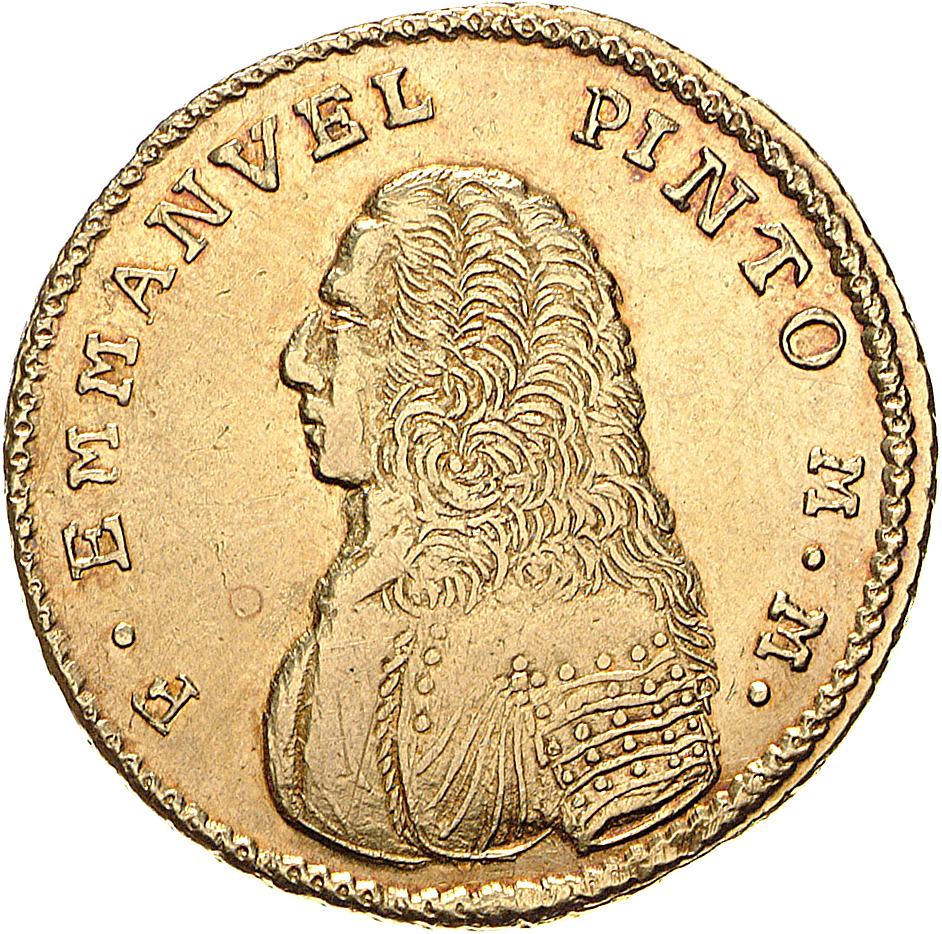
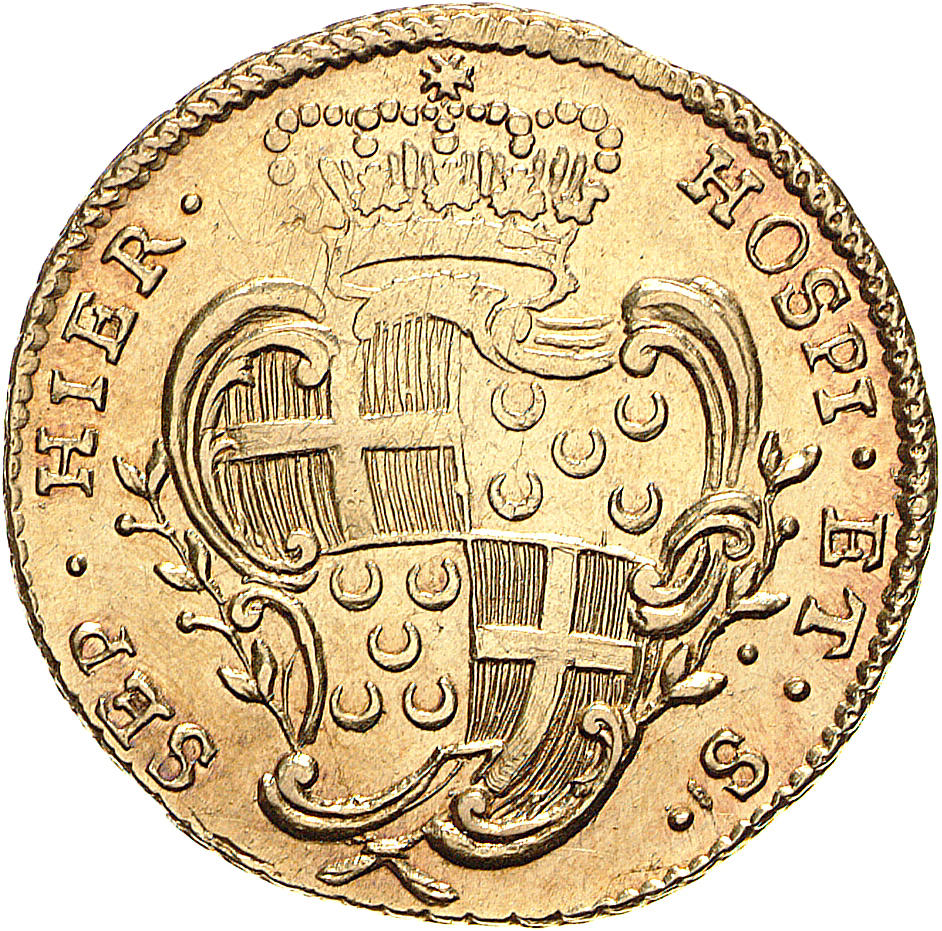
Pinto’s armoured bust faces left. The reverse carries a crowned quartered shield. The museum classifies the denomination as four zecchini, so it must not be confused with the later ten-scudi issues.
Technical specifications
- Composition
- Gold
- Mint
- Valletta
- Weight
- Unknown / not verified
- Diameter
- Unknown / not verified
- Total mintage
- Unknown / not verified
- Edge
- Unknown / not verified
- Obverse
- Armoured bust of Manuel Pinto facing left
- Reverse
- Crown above quartered shield
- Inscriptions
- Unknown / not verified
- Colour
- Unknown / not verified
- Serial format
- Unknown / not verified
The museum dates this specimen to 1742 but transcribes a reverse date of 1782, outside Pinto’s magistracy. Neither date is legible in the supplied photographs. The disputed inscription is left unverified; 1742 is retained only as the museum attribution.
Pinto introduced gold scudi multiples and silver fifteen- and thirty-tarì denominations. His use of a royal crown rather than a ducal coronet is relevant to the iconography of this magistracy.
The museum specimen
Measurements describe this museum specimen, not a manufacturing standard.
- Collection
- Berlin, Münzkabinett der Staatlichen Museen
- Object / accession
- 18222039 / Ohne Nummer
- Specimen weight
- 13.10 g
- Specimen diameter
- 29 mm
- Die axis
- 6 h
Museum text attribution and licence: CC BY-SA 4.0. Berlin, Münzkabinett der Staatlichen Museen
Dating and classification
A range denotes the issuing reign when no individual issue year is recorded.
Sources
Checked:
- Coins of Malta — Manuel Pinto da Fonseca private collection
- Berlin Münzkabinett — Manuel Pinto · 4 zecchini, 1742 (18222039)
- Museum structured record